
One of the worst films I have rented from the video store was a bio-pic of The One & Only Antoine de Saint-Exupery, the French poet, author and aviator. You may have read his book The Little Prince. He is somewhat enigmatic. The movie was somewhat unwatchable-as is often the case with biographic films.
I came accross this thought provoking quote by St-Ex:
Life creates order, but order does not create life.
In the context of creativity and design in particular I am struck by two almost opposite aspects of the thought. On one hand there is the notion that creative types are disorderly, not just messy desk people, but in their relationships with people, time and, often money. They are, according to the cliche, always slightly eccentric and out of sync with the rational, orderly, world. The psychologist and scientist Mihaly Czikzentmihalyi debunks that idea in Creativity. many of those he studied, among them some of the leading creative minds of the 20th Century, are in fact very orderly in their approach to matters relating to everyday life. The idea is that less time spent thinking about mundane or banal aspects of everyday life means more time is available for the real work of creating innovation.
Likewise I am often struck by the frequency with which design (surely a highly creative occupation), is simply the ordering of elements. The creation of pleasing arrangements of text, and image. Quite often an idea is absent. This is as true not only of extremely modernist executions, but also for the apparent chaos of post modern work or deconstruction-where anarchy seems in evidence but the application of a style pacifies the work. By comparison a clear connection between concept and execution is the only true means of achieving psychic disruption.
Spaced Out
In my travels around the web I ecountered this interesting blog:
On My Desk which is definitely worth a look. In Idealog magazine there is a piece on creative workspaces this month-it sparks an interesting number of questions (which I haven't got time to ponder right now). But as I am blessed with a sensational office with intimate views Auckland's waterfront precinct I understand the value of uplifting spaces-even if my ChangeFactor profile suggests that my output is not especially affected by my environment.

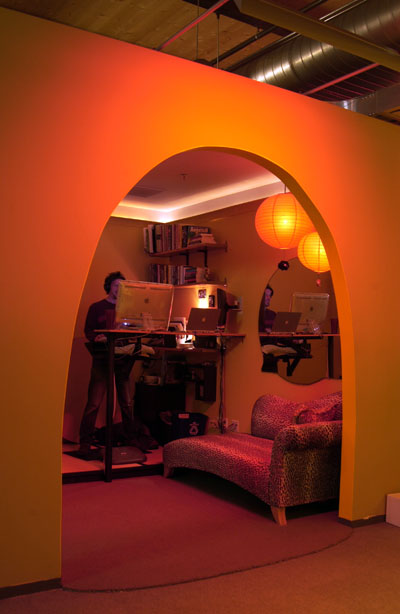
If you love the work of Pixar you will be intrigued by this tour of their offices.
The graphics guy who likes to work standing up reminded me of Dennis Brown the man who gave me my first break into the creative department - though the theatre of Mr Brown's mahogany wood paneled office couldn't be more opposite.
I interviewed Brian Richards, the well known brand strategist, for an article I am writing about storytelling. His offices are a temple to order. Pristine, white, zen. The experience is slightly unnerving at first, but calming after you get over the intial sense that you've stepped into a Kubrick set.
I don't think there are any rules that could be measured in any scientific sense. Which, to quote Martha Stewart, is "a good thing".
Comments
Post a Comment